

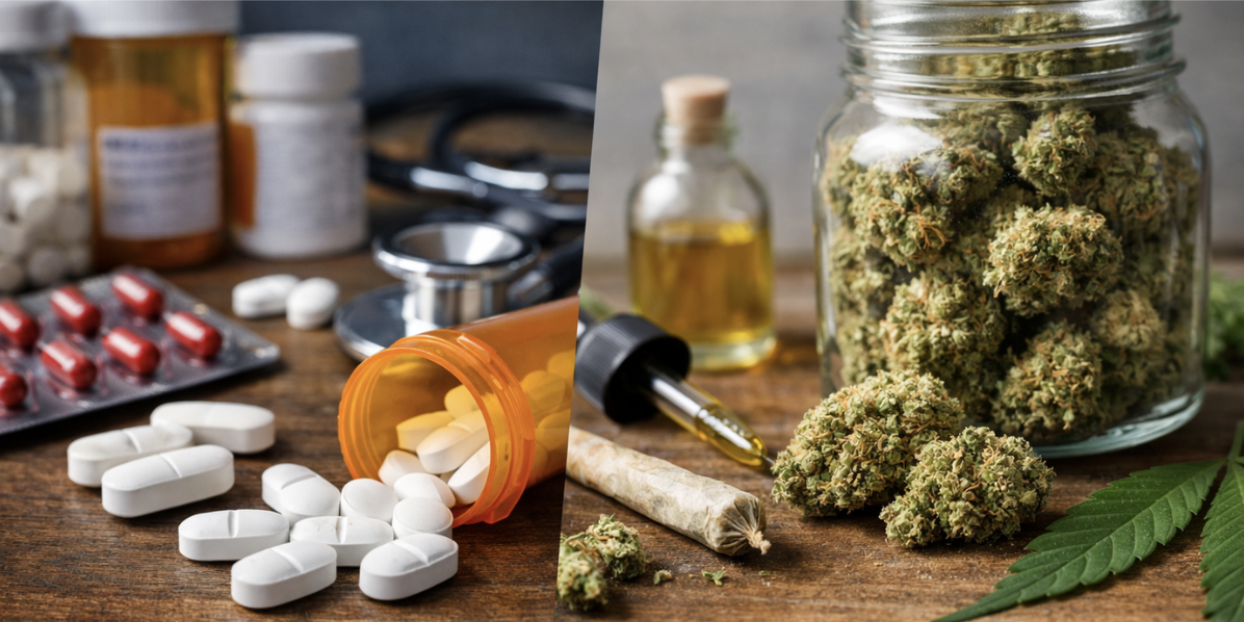
Chronic pain can change everything. Sleep gets lighter. Work gets harder. Your mood shifts. Even simple routines can feel like a negotiation between what you need to do and what your body will allow.
If you’ve ever felt stuck between “strong painkillers with real risks” and “medical marijuana with mixed opinions,” you’re not alone. Many people living with chronic pain want relief, but they also want safety, clarity, and a plan they can live with long-term.
This guide compares painkillers and medical marijuana in a calm, practical way. It’s educational only, not medical advice. Never start, stop, or taper prescription pain medications without guidance from your prescriber.
If you’re in Florida or Pennsylvania and want a clinician-led evaluation under state guidelines, you can Get My Med Card Now. If you’re already certified and need to stay active, choose Renew My Med Card.
What Chronic Pain Really Means (And Why Relief Is Hard)
Chronic pain is usually defined as pain that lasts longer than expected healing time, often months rather than days. But for most people, chronic pain isn’t just a number on a scale. It’s what the pain prevents you from doing.
Maybe you can still “push through,” but the cost is high. You crash afterward. You sleep poorly. You become more anxious or irritable. You stop moving as much, which can lead to stiffness and more pain. The cycle is exhausting.
That’s why chronic pain management often focuses on function. Can you sleep more consistently? Move more comfortably? Handle your day with fewer flare-ups? Relief is real, but it’s rarely one perfect solution that works forever.
A Clear Look at Common Painkillers
Painkillers are not all the same. They work through different pathways and come with different benefits and risks. Understanding the categories helps you make better decisions with your care team.
NSAIDs (like ibuprofen or naproxen)
NSAIDs are commonly used for pain tied to inflammation, things like arthritis flares, injuries, or certain musculoskeletal pain patterns. For some people, they’re helpful and predictable.
But they’re not risk-free. Long-term or high-dose use can irritate the stomach, affect kidney function, and increase bleeding risk. Some people also need to be cautious with blood pressure or cardiovascular concerns.
The key is that NSAIDs can be a useful tool, but they’re not always a safe long-term “default” for every body.
Acetaminophen
Acetaminophen is widely used for mild to moderate pain. It can be helpful, especially when inflammation isn’t the primary driver.
The main caution with acetaminophen is dose awareness. Taking too much, especially across multiple products, can be harmful to the liver. This is why it’s important to read labels carefully and talk with a clinician if you’re using it regularly.
Opioids
Opioids are often the most emotionally loaded part of the conversation. They can be effective for certain types of severe pain, especially short-term pain or pain related to specific conditions. They can also improve function for some people in carefully monitored situations.
They also carry serious risks.
Opioids can cause dependence, tolerance, constipation, sedation, and impaired coordination. Over time, many people need higher doses to get the same effect, which increases risk. Combining opioids with other sedating medications can raise the risk of dangerous respiratory depression.
If you take opioids, it’s essential to stay closely connected to your prescriber. Do not stop abruptly, and do not try to “self-taper” without medical support. Withdrawal can be physically and emotionally intense, and a safe plan should be individualized.
Other chronic pain medications
Many chronic pain plans include medications that aren’t classic “painkillers,” such as certain nerve pain medications or antidepressants used for pain pathways. Some people also use muscle relaxers for short-term flare management.
This is a helpful reminder: chronic pain is often multi-mechanism. Two people can share the same diagnosis and still respond differently to the same medication plan. That’s why real pain management tends to be layered, medications, movement, sleep support, stress reduction, and sometimes medical cannabis.
Where Medical Marijuana Fits in Chronic Pain Care
Medical cannabis is widely discussed for chronic pain, but it’s important to approach it with realism.
Medical marijuana is not a cure for chronic pain. It is not standardized like a typical prescription medication. Cannabis products vary widely in THC and CBD content, how fast they take effect, and how they feel in your body. The same product can even feel different depending on your sleep, stress, tolerance, and overall health.
That said, many patients explore medical cannabis because they want an option that feels more manageable in daily life, or because they’ve had side effects with traditional pain medications.
What medical cannabis is (and isn’t)
Medical cannabis is used by some patients to support comfort, sleep, appetite, and overall quality of life. For chronic pain, many people are seeking a reduction in the intensity of pain, fewer flare days, or better sleep that makes pain more tolerable.
It is not “prescribed” in the traditional sense due to federal law. Instead, clinicians provide recommendations or certifications when medically appropriate under state guidelines.
What research suggests (balanced view)
Research on cannabis for chronic pain is still developing. Some evidence suggests potential benefits for certain pain types, particularly neuropathic (nerve-related) pain, while other pain types have more mixed or uncertain evidence.
It’s also important to be careful with claims about cannabis replacing opioids. Some patients report reducing opioid use after starting cannabis, but the strength of scientific evidence for a consistent opioid-sparing effect remains uncertain. That’s why a clinician-guided plan matters, and why “replacement” should never be treated as automatic.
Painkillers vs Medical Marijuana: A Practical Comparison
Most patients aren’t asking, “Which is perfect?” They’re asking, “Which is safer for me, and which helps me live my life?”
Here are the key comparison points that matter most in real-world chronic pain management.
Speed and predictability
Many painkillers, especially when used as directed, have predictable onset and duration. This predictability can be valuable when you’re trying to function through the day.
Cannabis can be less predictable. Effects vary by product type, potency, delivery method, and personal tolerance. Two people can have very different responses to the same THC/CBD ratio.
If you’re someone who needs stable, repeatable symptom control to work, parent, or drive, predictability matters.
Side-effect profiles
Painkillers and cannabis both have side effects. The difference is often what kinds of tradeoffs you’re choosing.
Opioids carry clear risks around dependence, tolerance, sedation, and overdose, especially when combined with other sedatives. NSAIDs carry risks with long-term use, particularly for certain people.
Cannabis can cause dizziness, fatigue, dry mouth, increased heart rate, anxiety, and impairment. Some people experience brain fog or lower motivation. Others feel calmer and sleep better. Some feel nothing at all.
A useful way to think about this is not “which is safer overall,” but “which is safer for my body, my health history, and my daily responsibilities.”
Function, sleep, and quality of life
Pain management isn’t just about pain intensity. It’s also about how you function.
Some people find painkillers help them “push through” but leave them feeling numb, constipated, or foggy. Others find cannabis helps them sleep and relax, but makes it harder to focus during the day.
That’s why many chronic pain plans involve a careful balance: reducing the most disruptive symptoms without creating new problems.
Can Medical Marijuana Replace Painkillers?
This question comes up constantly. The honest answer is: sometimes cannabis becomes part of a plan that changes medication use, but it should never be treated as a guaranteed substitute.
For some patients, cannabis is used alongside other therapies. For others, it supports a gradual reduction of certain medications over time. And for some, it doesn’t help enough to justify the downsides.
Why “replace” isn’t always the right goal
Chronic pain is often complex. You might need support in multiple areas, sleep, inflammation, nerve pain, muscle tension, stress response. One tool may help one layer but not another.
Cannabis can be an add-on strategy rather than a replacement strategy. This is especially true if a person is using medications that require careful tapering or are supporting an important part of functioning.
The safest approach if you’re considering change
If you’re thinking about cannabis because you want to reduce painkillers, the safest approach is simple:
- Talk to your prescriber first.
- Avoid abrupt changes.
- Track your symptoms and function over time.
- Make one change at a time, so you can understand cause and effect.
This isn’t about moving slowly to frustrate you. It’s about safety and clarity, especially if you’re dealing with medications that can cause withdrawal or rebound symptoms.
Safety Notes You Should Not Skip
If you read nothing else, read this section carefully.
Impairment and driving
Cannabis can impair reaction time and judgment. Do not drive or operate machinery while impaired. If you’re using cannabis in a medical context, plan your timing responsibly and avoid safety-sensitive tasks.
Drug tests and workplace policies
Even with a medical card, THC may show up on drug tests. Many workplaces follow strict policies, especially in safety-sensitive roles. Always check your workplace policy and understand the risks before using THC-containing products.
Combining cannabis with sedating medications
Combining cannabis with opioids, benzodiazepines, sleep medications, or other sedatives can increase sedation and impairment. This is a conversation to have with a clinician, not a situation for trial-and-error.
Tolerance and “more isn’t better”
Over time, frequent cannabis use can lead to tolerance, meaning you may need more to feel the same effect. This can increase cost, side effects, and reliance. A responsible approach focuses on the lowest amount that supports your goals, guided by clinician input.
How to Talk to Your Doctor About Chronic Pain Options
Chronic pain conversations can feel rushed, especially in busy clinics. The more prepared you are, the better the conversation tends to go.
Before your visit, write down:
- Your pain pattern (where it hurts, when it flares, what worsens it).
- Your current medications and doses.
- Side effects you’re experiencing.
- What you’ve tried already and what helped or didn’t help.
- Your functional goals (sleep, walking, working, caring for family).
Questions you can ask:
- What are the safest next steps for my type of pain?
- What risks do I need to consider with my current meds?
- If I’m considering medical cannabis, what should I watch for?
- If tapering is appropriate, what would a safe plan look like?
A good plan is individualized. It should feel realistic, not overwhelming.
How Verileaf Supports a Safer, Clearer Path
Verileaf is here to help patients in Florida and Pennsylvania explore legal, compliant access to medical cannabis through a professional evaluation.
We do not issue prescriptions. Our licensed clinicians provide recommendations or certifications when medically appropriate under state guidelines. We keep the process respectful, ethical, and clear, so you can make informed choices rather than guessing.
If you’re new and want to explore whether medical cannabis may be appropriate for chronic pain, click Get My Med Card Now.
If you’re returning for a renewal, choose Renew My Med Card to stay active and compliant.
Key Takeaways
Painkillers and medical marijuana both play roles in chronic pain management, but they come with different tradeoffs.
Painkillers can be more predictable, but long-term use, especially opioids, can carry serious risks. Cannabis may support comfort or sleep for some people, but effects vary widely and impairment and tolerance must be taken seriously.
The safest path is clinician-guided, individualized care. No abrupt changes. No assumptions. Just a plan you can live with.
For all inquiries, you can reach us at contact@buymedcard.com.
